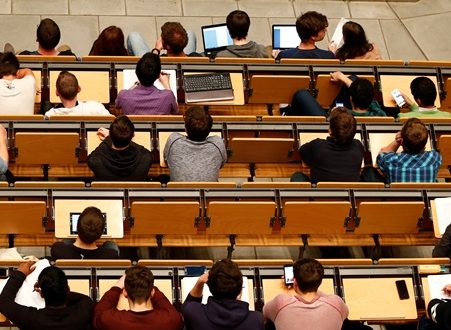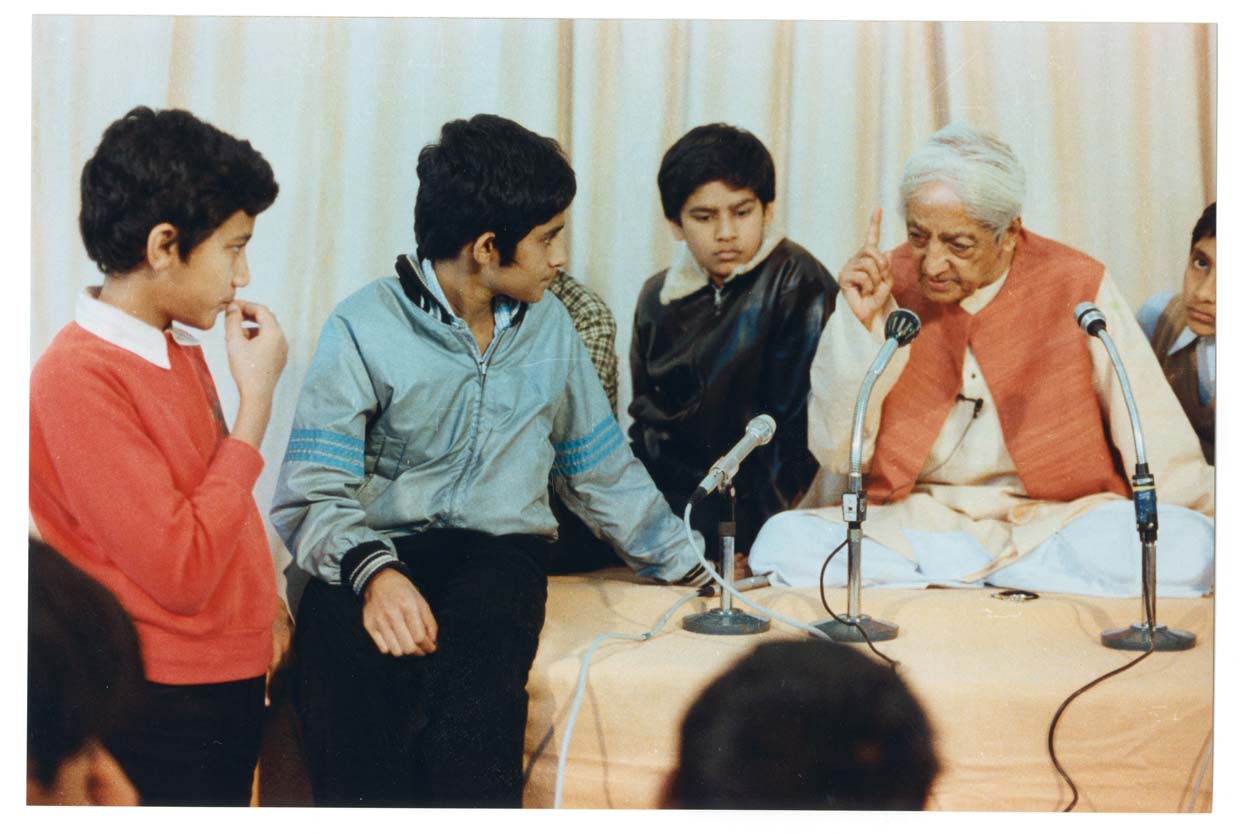
This reflective journey demands more than the delivery of content or the enforcement of discipline. It calls for presence, attentiveness, and humility. When educators regard themselves not as authorities perched above, but as fellow beings on a shared path, the nature of education changes. The classroom becomes a space not of conformity, but of discovery; not of silence, but of dialogue; not of performance, but of authentic learning.
As the philosopher and educator J. Krishnamurti profoundly stated, “The function of education is to help you from childhood not to imitate anybody, but to be yourself all the time.” (Krishnamurti, Think on These Things). These words challenge us to examine whether our practices in schools today truly support this vision, or whether they inadvertently promote imitation, compliance, and fear.
The Quest for Belonging in a Competitive Culture
Belonging, at its core, is not about blending in or meeting others’ expectations. It is about feeling safe to be oneself. Yet in a culture obsessed with achievement and comparison, children often internalise the belief that they are only as good as their latest result. In a world increasingly driven by speed, competition, and constant comparison, education risks becoming a transaction rather than a transformation. The modern learner is often expected to sprint towards achievement, mastering subjects, acquiring skills, and meeting benchmarks, all while navigating a relentless stream of distractions. But amidst this whirlwind, what often gets overlooked is the child’s inner voice—the quiet, persistent whisper of curiosity, wonder, and purpose. It is here that educators and pedagogues have a sacred and urgent responsibility: to walk alongside their students as co-travellers, helping them discover not only knowledge, but themselves.
measuring, ranking, and assessing can erode a child’s sense of self-worth, replacing it with anxiety and self-doubt.
Educators as co-travellers have the power to disrupt this narrative. When teachers create spaces where each student feels seen, heard, and valued—not for their performance, but for their presence—they plant the seeds of authentic belonging. In doing so, they help students form a relationship with themselves that is rooted not in judgment, but in compassion.
Krishnamurti reminds us, “Belonging is not about attachment to a particular group, culture, or society; it is a deep understanding of oneself. In that understanding lies the flowering of love and compassion.” (Freedom from the Known). This understanding becomes the foundation from which all true learning and growth can emerge
Learning Through Relationship, Not Control
In traditional education systems, the teacher is often positioned as the one who knows, the one who dictates, the one who disciplines. But when we shift to a model of co-travelling, the dynamic transforms. The teacher listens as much as they speak. They admit uncertainty. They model curiosity. They do not impose knowledge, but invite exploration.
In such environments, students do not learn out of fear, but out of engagement. Mistakes are not punished but examined. Silence is not feared but honoured. Questions are not a threat to authority, but a gateway to deeper understanding.
A co-travelling educator resists the urge to control and instead chooses to relate. This does not mean the absence of structure or boundaries, but the presence of empathy, flexibility, and dialogue. The child is not a problem to be fixed, but a person to be understood.
Krishnamurti eloquently states, “It is no measure of health to be well-adjusted to a profoundly sick society.” (The First and Last Freedom). If the structures around us are marked by stress, alienation, and fear, then the role of education is not to help children adjust to them, but to question them, see through them, and imagine something different.
Nurturing Inner Confidence and Self-Inquiry
At the heart of a meaningful education lies the capacity for self-inquiry. This is not the same as self-obsession or ego. Rather, it is the quiet strength that comes from knowing oneself deeply—one’s values, fears, dreams, and questions. Such inner awareness cannot be taught through textbooks; it must be cultivated through experience, reflection, and relational safety.
Many students today suffer from a profound insecurity masked by outward achievement. They may excel in exams but remain unsure of who they are. They may please adults but silence their own inner truths. In such cases, the educator’s role is not to push harder, but to pause and ask: What does this child need to feel whole?
Krishnamurti observed, “The highest form of human intelligence is to observe yourself without judgment.” (The Book of Life). This form of observation is a skill that must be nurtured gently and consistently. It requires that children are not constantly evaluated by others, but encouraged to reflect and evaluate their own experiences with honesty and care.
Education as Awakening, Not Conditioning
The danger of a system rooted in rewards and punishments is that it conditions children to look outward for approval. Over time, this dependence can blunt their inner compass. They may become adept at meeting expectations but lose touch with their passions. They may learn to conform but forget how to imagine.
True education is not about shaping the child into society’s image but awakening their capacity to see, to care, and to create. This awakening cannot be rushed. It unfolds in its own time and through its own rhythm.
“The whole point of education is not to make you conform, but to help you to grow so that you can face life intelligently and not merely accept things blindly,“ wrote Krishnamurti in Education and the Significance of Life. These words underscore a radical truth: education should not be about making children fit the world; it should be about helping them transform it.
Such a vision requires courage—not just from students, but from educators. It is easier to follow the script, to deliver the syllabus, and to manage the classroom. It is harder to pause, to listen, to accompany a student through confusion and conflict. But this is the very work that makes education human.
Reimagining the Role of the Educator
To be a co-traveller is to embrace vulnerability. It is to admit that we, too, are learning. It is to remember that knowledge does not reside solely in textbooks or degrees but also in silence, in mistakes, in relationships.
When educators walk beside their students, rather than ahead of them, they invite a different kind of connection. One that is not rooted in control but in trust. One that does not demand obedience but inspires authenticity.
Children sense this difference. They may not articulate it, but they feel when a teacher truly sees them. And when they are seen, they begin to see themselves.
“It is essential to understand yourself, to understand what you are, to understand why you are, and not merely to conform to what others expect of you,” Krishnamurti said in Freedom from the Known. This understanding is the cornerstone of both freedom and responsibility. It is the soil in which wisdom grows.
A Shared Journey Towards Wholeness
Education is not a ladder to climb but a path to walk. It is a path that includes setbacks, detours, questions, and revelations. It is not a straight line but a spiral—always returning, deepening, evolving.
As co-travellers, educators do not light the path from above. They walk it with their students, hand in hand, sometimes leading, sometimes following, always learning.
In helping children find their inner voice, educators rediscover their own. They are reminded that their work is not just to produce successful individuals but to nurture whole human beings—thoughtful, curious, resilient, and compassionate.
This is not an easy task in a world that values speed over reflection and results over relationships. But it is a necessary one. For if education does not help us become more human, more awake, and more connected to ourselves and one another, then what is its purpose?
In choosing to walk as co-travellers, educators affirm a simple yet radical truth: that every child matters, not for who they might become, but for who they already are.
Priyanka Soman is an educator and writer who is passionate about nurturing curiosity, empathy, and self-awareness in children through creative expression and reflective teaching practices.