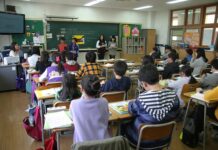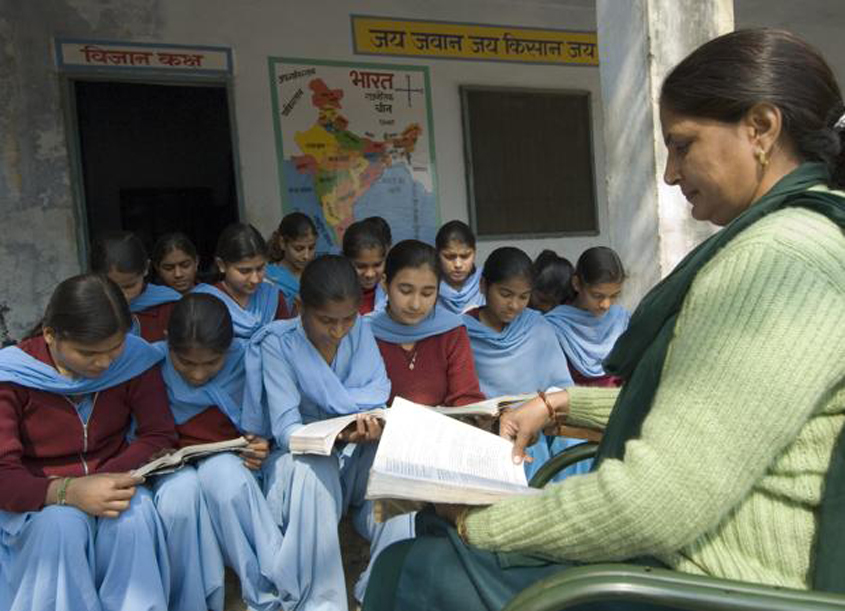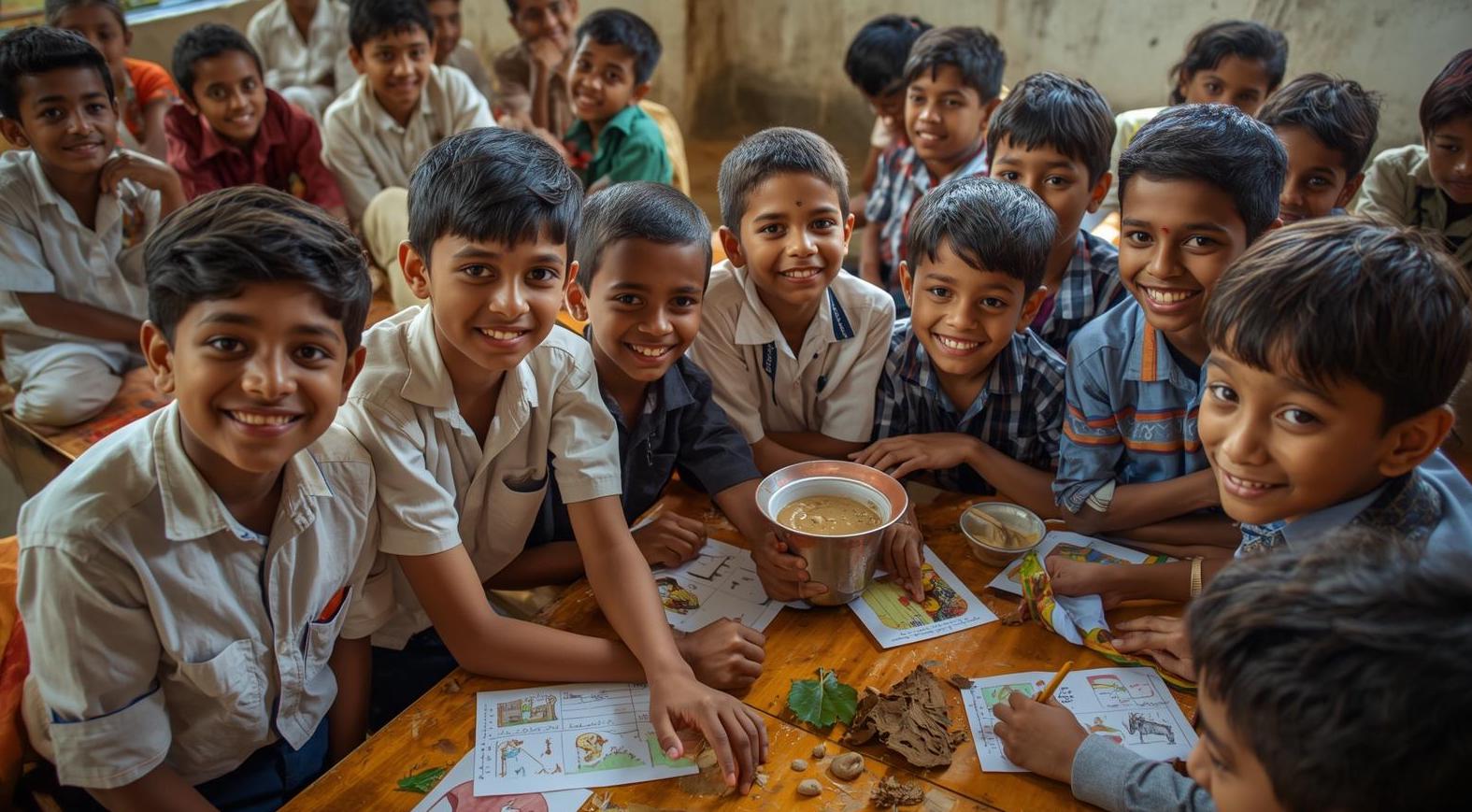
Walk into any middle school classroom in India, and you will find a microcosm of our society — children who speak different languages at home, follow different customs, eat different food, and come from families that live very different economic realities. This diversity is not a challenge to be managed; it is a rich resource to be celebrated and woven into the fabric of learning.
The real task before a teacher, therefore, is not merely to complete the syllabus but to create a space where no child feels invisible or left behind — where difference becomes a source of strength and learning, not division.
Innovative pedagogy, in such a classroom, does not necessarily mean smartboards, tablets, or special equipment. It means imaginative use of everyday materials, creative rethinking of classroom routines, and a mindset that treats every learner as capable of contributing something unique. It reflects the teacher’s faith in the collective intelligence of the group and her skill in designing experiences that help children learn with and from one another.
Seeing Diversity as an Opportunity
The first step is to reimagine diversity not as a barrier but as a learning opportunity. When a child speaks a different language, follows a different faith, or carries a different accent, the classroom becomes linguistically and culturally enriched.
A teacher who recognizes this begins to draw from these differences rather than suppress them. Every story, proverb, or local idiom shared by children can open a window to another world — sparking curiosity and empathy among peers.
This understanding of diversity as strength is something I experienced deeply during my association with Shiksha Swaraj, an initiative that worked with teachers and learners in marginalized communities. There, classrooms became living spaces of dialogue — where learning went hand in hand with the struggle for dignity and self-expression.
Guiding Principles for an Inclusive Pedagogy
-
Participation over performance: Every learner must find a way to participate meaningfully, not merely compete.
-
Dialogue over instruction: Teaching becomes more powerful when it grows from listening and questioning, not only telling.
-
Local to global: Starting from children’s lived experiences — their homes, neighbourhoods, and languages — makes abstract ideas come alive.
-
Collaboration over individualism: Group work builds confidence and empathy while helping children learn from diverse perspectives.
These principles can shape how we teach every subject, even with minimal resources.
Mathematics: Rooted in the Local World
Math is often seen as culture-neutral, but it can easily become alienating if taught only through textbooks and rote drills. Imagine a lesson on percentages and profit-loss. Instead of numbers on a board, children could visit the school canteen or a nearby shop, observe transactions, and calculate discounts and profits from real prices.
Those from families running small businesses can share their parents’ experiences, helping others understand how mathematics operates in real life. Even simple activities — measuring the classroom’s floor area with a rope, or comparing the weight of grains brought from different homes — make math tangible.
In multilingual classrooms, children can explain steps in their home languages before presenting them in the school language, allowing peer learning across linguistic lines. This approach not only deepens understanding but also restores confidence to those who struggle with language barriers.
Science: Inquiry from Everyday Life
Science learning need not depend on costly laboratories. Curiosity and observation are the best tools we already have. A teacher can begin a lesson on states of matter by asking, “What happens when we boil milk at home?” or “Why does water collected in an earthen pot feel cooler?”
Children bring in their local knowledge, sometimes drawn from agricultural or traditional practices — drying papads, making lime water, preserving pickles — and these experiences become starting points for scientific exploration.
When children conduct small group experiments — like observing evaporation by leaving wet cloth pieces in sun and shade — each group member can take a distinct role: observer, note-taker, questioner, explainer. This ensures that everyone participates, not just the most vocal. Science thus becomes a democratic process, not a one-way delivery of facts.
Learning Beyond Binaries: Integrating Hand, Mind, and Heart
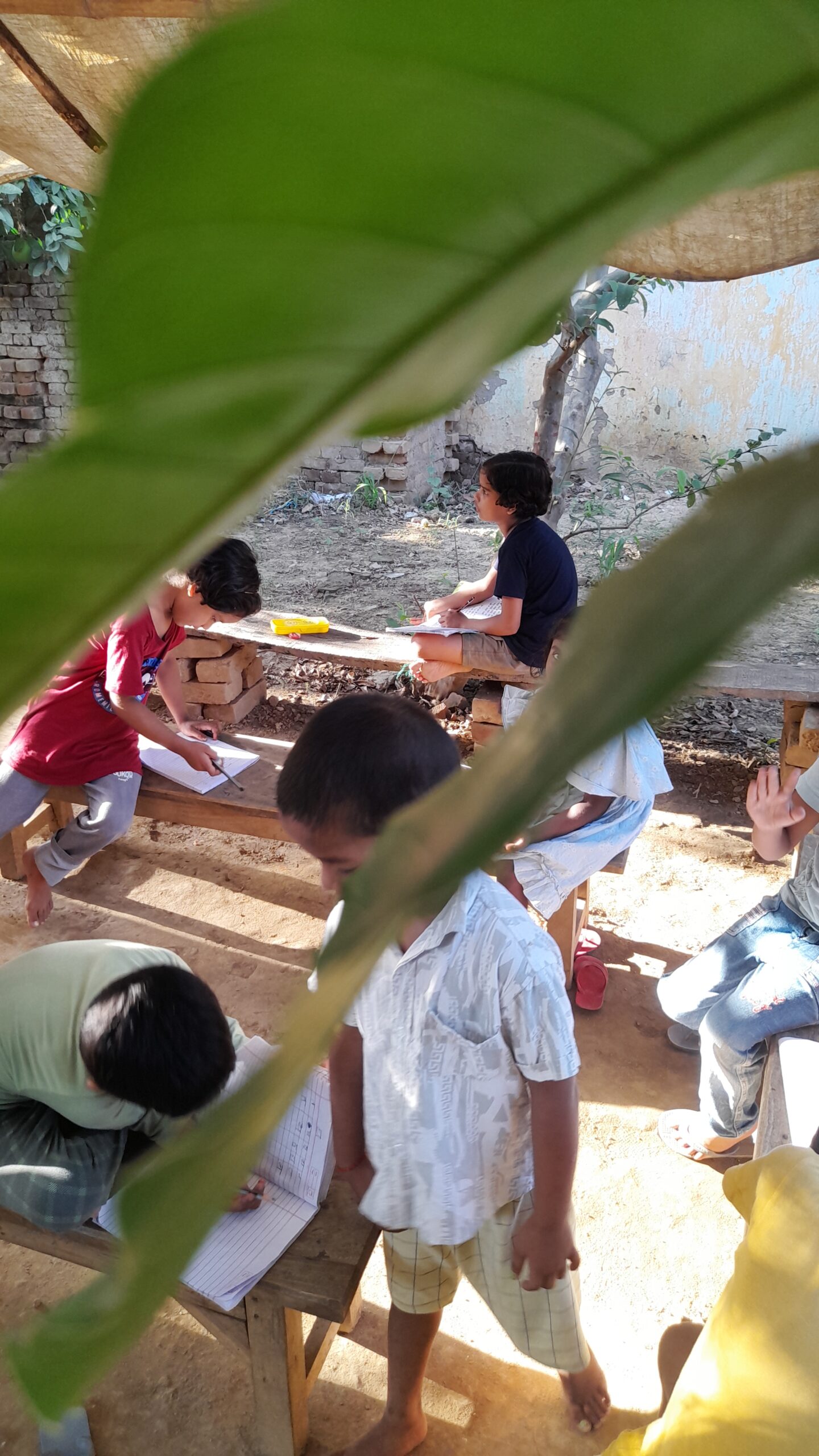
One of the most transformative experiences I witnessed in Shiksha Swaraj was how we consciously worked to diminish gender and caste-based hierarchies through everyday school practices.
All children — irrespective of gender or background — participated equally in activities like cleaning the classroom, gardening, farming, arranging books in the library, working on the computer, solving mathematical problems, and creating crafts.
This deliberate integration of hand and mind blurred the traditional lines between “intellectual” and “manual” work. It also challenged patriarchal and caste-based notions of purity, labour, and dignity.
When boys swept the floor and girls handled computers or performed science experiments, a quiet revolution unfolded — one rooted in equality and shared responsibility. The children began to internalize that no work was inferior and every contribution held value.
These moments revealed how inclusive pedagogy is not confined to subject teaching alone; it extends to how a school structures its daily life. Equality must be lived, not merely taught.
Social Science: Learning as Empowerment
Social science classrooms are fertile grounds for nurturing inclusion. When studying migration, for example, a teacher can invite students to map their family stories — who in their family moved from where and why.
Such stories often bring forth linguistic, religious, and economic diversity that students had not previously recognized or valued. The resulting classroom map becomes a colourful, emotional document of shared histories and hopes.
During my work with Shiksha Swaraj, I once taught a group of young Dalit women about the Fundamental Rights and Duties in the Indian Constitution. What began as a lesson in political science soon turned into a deeply personal conversation.
The women questioned, with quiet pain, why people from their communities continued to face discrimination and exclusion despite these constitutional guarantees. Their questions pierced through the textbook’s formality and revealed the distance between law and lived experience.
That day, learning about rights was not just an academic exercise — it was a collective act of awakening, of finding the language of empowerment within the framework of the nation itself.
Moments like these reaffirm the transformative power of education when it connects knowledge to lived realities. A classroom becomes inclusive not only when it accommodates differences but when it allows learners to reclaim their voice and agency through learning.
Language Learning: Every Language Counts
Language classrooms are naturally inclusive spaces when teachers view multilingualism as a gift, not a problem. In middle school, students often hesitate to speak in English or the state language because they fear ridicule.
The teacher can turn this fear into curiosity by encouraging “language bridges”: translating simple stories or proverbs from home languages into English or Hindi, comparing idioms, or creating a multilingual word wall in the classroom.
Story circles are powerful tools. Once a week, children can narrate short tales from their grandmother’s village or their own experiences. Others can retell the story in another language, adding details or morals. Through this, children learn vocabulary, listening skills, and cultural sensitivity.
Even poems or songs from different traditions can be performed collectively, bringing rhythm, laughter, and pride into the classroom.
Creating a Cherished and Vibrant Space
When learning becomes participatory, the classroom begins to feel like a living organism — buzzing with ideas, laughter, and compassion. The teacher can use simple tools — posters made from old newspapers, group seating arrangements, class discussions, and storytelling corners — to transform the physical and emotional environment.
Celebrating small milestones, displaying children’s work, and creating spaces for reflection give every learner a sense of ownership. Building such a classroom does not require expensive resources; it requires imagination and belief in the child’s potential.
Even with chalk, chart paper, and shared curiosity, a teacher can turn lessons into journeys of discovery and connection.
Teaching as an Act of Hope
In a diverse classroom, innovative pedagogy is not a luxury — it is an ethical necessity. Each time a teacher designs a lesson that allows every learner to participate with dignity, she reaffirms faith in education as a social equalizer.
The inclusive classroom becomes a miniature democracy where dialogue, respect, and shared learning flourish.
When difference is celebrated and every voice finds space, the classroom turns into a cherished place — where learning is not just about marks but about meaning; not about sameness but about belonging.
That is the promise of innovative pedagogy for inclusive classrooms — to make every child feel, “This is my place. I belong here.”
Ananya Pathak is co-founder of Shiksha Swaraj Centre – a learning and resource centre for Indian rural childre. You can reach her ananyapathaak@gmail.com