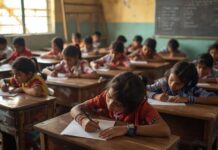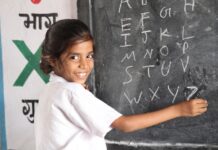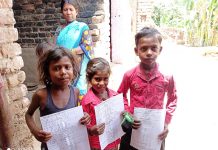
India commemorates Teacher’s Day annually on September 5, which is also known as the birth anniversary of Dr.Sarvepalli Radhakrishnan, the country’s first vice president and later the second president of India. A society’s foundation is its teachers, whose enormous contributions consistently produce well-behaved and motivated students – Teachers produce the individuals who work in the socio-political, economic, bureaucratic, educational, and service sectors, all of which are essential to a society’s ability to function.
A great teacher can be a parent, a farmer, a driver, or any combination of these who should teach the children the value of compassion, sharing, sympathy and empathy. Indian society has historically said that a teacher should transmit knowledge and information through educational institutions or curriculum designed specifically for teachers. However, someone who works in a car or mechanical shop can instruct the younger mechanics on the ins and outs of handling and repairing the cars, which is also a form of teaching, or a farmer, who imparts knowledge to the future generations about the value of farming and how to use crops of a teacher, but also understanding the interests and tastes of students and building them through the concept of ‘think outside the box’. Therefore, teaching is a noble service where anyone can be a good teacher through their activities. However, all the discourses and discussions regarding teaching in India are based on the viewpoint of classroom practices.
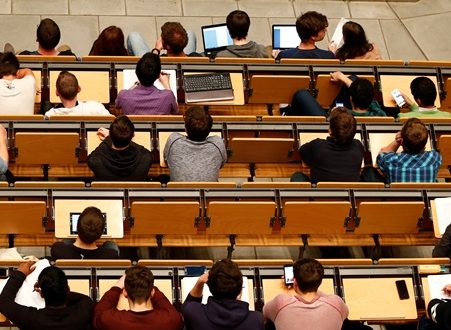
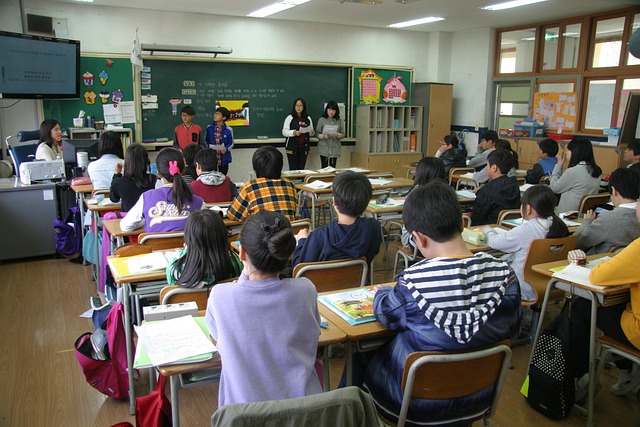
One of the most important challenges that most teachers deal with is how to make the classroom more inclusive and democratic. The majority of teachers in the Indian educational system within the allotted time. Does this kind of to complete the syllabus make sense, in particular, when considering Gen Z students? Students from Generation Z, who grew up in an age of rapid technological development, can use the newest tools to gather information from various search engines about how to use a product to create an assignment.Students can get everything through a fingerprint and an online recorded class- then the role of teacher becomes an advisor or mentor. Most of the students in Social Science particularly need a mentorship and they expect the classroom should be more interactive through group discussions, games, activities, seminars and presentations. But when it comes to engineering and medical class rooms, students need the support of teachers in particular dealing with laboratory activities.
Despite this, teachers nowadays are also using technological advancements to reduce their workload in the classroom. It begs the question of whether this condensed method of obtaining information from search engines fosters knowledge creation among teachers and students or if it undermines their capacity for creativity and critical thinking. Since a classroom is made up of students from a variety of socioeconomic, cultural, and educational backgrounds, it can be difficult to determine how a teacher might make the classroom more democratic. Many students in India are vulnerable when it comes to receiving an education; others enjoy the true benefits of belonging to the Gen Z category. In this situation, the teachers or mentors’ role and job are more important in bringing the students’ diversity into one cohesive frame and treating them fairly. A teacher needs to be enthusiastic and hopeful about learning, relearning and unlearning. A teacher ought to be aware of both their own potential and their student’s feelings at the same time. The majority of the teacher’s initial years of their career with the idea of social change and building responsible generations. Soon after, they become tied down– Why do they lose their interests in teaching and building students? Is it because of the educational environment –which consists of lack of peer group support, lack of equipment , low student interest and is it because of their personal issues?
India has a legacy of great teachers namely- Savitri Phule,Rabindranath Tagore, Dr. Sarvepalli Radhakrishnan, Dr. A P J Abdul Kalam, and Dr. Zakir Husain , etc have contributed to the way teachers can build a nation. Due to the present technological advancement and changing lifestyles of people, the role of a teacher in the public educational system is becoming like a mentor. The era which Gen Z belongs to is more dominated by smartphones and connectivity; they can access unlimited information through different sources of search engines. This one side makes them more adaptive and confident, but can create various traps (spans) and also increase emotional, mental and physical health issues. In this context, apart from providing and generating knowledge regarding the subject, Gen Z expects more guidance, suggestions and practical solutions from teachers to overcome the issues they face. They consider teachers to be the mentors, facilitators and motivators who bridge the gap between raw information and real understanding. Gen Z students face mental health issues such as anxiety, stress, which make them vulnerable. Therefore a teacher should always accept and acknowledge the generation –their issues and concerns , then make the class room spaces where students can learn sympathy, empathy, humanity, and can build concerns about respecting their rights and others rights . Teachers must balance digital tools with human connection, showing students that learning is not just about acquiring skills but also about building values, resilience, and community. Gen Z challenges teachers to reinvent themselves with innovative ideas and doubts; thus a teacher should be adaptive and enthusiastic to learn new things. Simply put, teachers should learn alongside their students and shape them into critical thinkers, responsible digital citizens, and kindhearted people rather than just imparting knowledge.
Dr. Syamkumar V is a Junior Research Fellow at Loyola Institute of Social Science Training and Research (LISSTAR), Loyola College, Chennai, India.