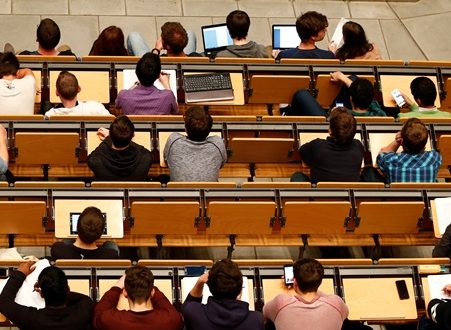
The emergence of Information Technology (IT), particularly
Artificial Intelligence (AI), has brought sweeping changes to
classroom practices since the 1990s. From attendance-taking to
online examinations, every aspect of teaching and learning has
undergone transformation—accelerated further by the COVID-
19 pandemic and continuing into the post-pandemic era. In the
race to modernize education, AI has become the centerpiece of
policy innovation. While it promises efficiency and
personalization, it also introduces complexity, ethical concerns,
and new demands.
AI offers significant advantages in the classroom. Teachers and
students can now access information at any time, prepare notes
and assignments quickly, and clarify doubts instantly—whether
on a bus, at home, or in a shop. Adaptive learning software,
virtual tutors, and intelligent assessment systems simulate
human thinking to provide personalized learning pathways.
Yet these benefits come with a cost. AI is reshaping traditional
teaching methods and redefining teacher–student interaction.
When students encounter difficulties, they increasingly turn to
AI tools rather than engaging in conversations with teachers or
peers. Practices such as asking questions the next day,
discussing doubts with classmates, or learning through shared
curiosity—once central to classroom culture—are slowly fading.
As a result, many learners become more introverted, self-
contained, and dependent on machines.
While I am not opposed to AI, I believe information should
come from diverse sources: people, books, educators, AI tools,
television, newspapers, and more. Relying on a single source
limits perspective and weakens the social and emotional fabric
that makes learning meaningful.
In earlier decades, children often played on playgrounds after
school, forming friendships and learning social skills. Today,
many prefer online games. Similarly, teachers once taught
subjects like arithmetic, chemistry, or social science through
interactive games and lively activities. Students and teachers
participated fully, building enthusiasm and camaraderie. Now,
many learners expect highly structured animations or recorded
videos instead of interactive, real-life play.
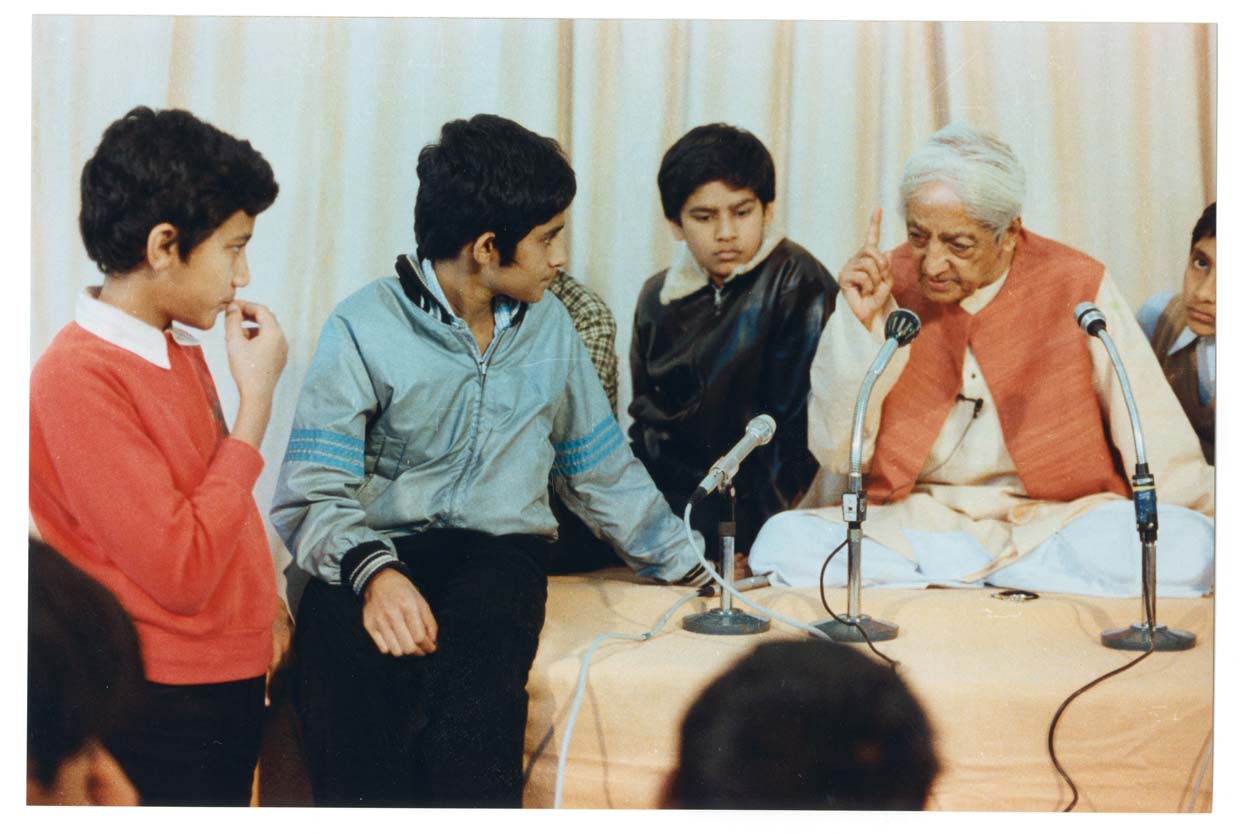
The shift also affects storytelling and personal connection. I
remember feeling deeply connected to my teachers when they
shared personal experiences and invited us to share ours. Those
stories brought humor, excitement, and empathy into our
learning. Today, many students recount stories from anime or
web series instead of real-life encounters, contributing to a
more detached, less grounded classroom culture.
Classrooms bring together individuals from different
backgrounds, cultures, habits, and personalities. They are living
ecosystems shaped by emotion, relationships, and
unpredictability. Teachers manage trauma, neurodiversity,
language barriers, and social inequalities while delivering
curriculum and meeting achievement expectations. This
dynamic human element cannot be replicated by AI.
The classrooms of the future will likely be hybrid environments,
blending traditional teaching with advanced AI technologies.
Virtual and augmented reality may offer immersive experiences
beyond what conventional classrooms can deliver. Teachers,
therefore, must learn to incorporate AI tools thoughtfully to cultivate a comprehensive, critical, and high-quality educational experience.
However, the benefits of AI are not equally accessible to all.
Students in low-income communities or developing countries
may lack access to AI-powered tools available to their peers in
wealthier regions. Any educational reform involving AI must
address issues of equity. Without this, AI risks deepening
existing inequalities.
AI also raises concerns about classroom integrity, authorship,
transparency, data privacy, and fairness. To navigate these
challenges, teachers, administrators, and policymakers must
take deliberate action. During pandemics or similar crises,
online learning and AI may indeed be essential—but they must
complement, not replace, the human relationships at the heart
of education.
Classrooms remain the finest spaces for creativity,
experimentation, and constructive criticism. As AI continues to
influence education, it is crucial to ensure that these
humanizing elements are not forgotten.
Dr. Syamkumar V is a Junior Research Fellow,
LISSTAR, Loyola College, Chennai.