Licypriya Kangujam from Manipur was only six when she first realized that the world was headed toward an environmental disaster. At seven, she donated her savings to help the victims of the 2018 Kerala floods. Since then, she has become one of the youngest climate activists in the world. Licypriya’s journey reflects a growing movement among children and young adults in India who are becoming deeply aware of the climate crisis threatening their future and survival.
A landmark global survey on eco-anxiety among children (Hickman et al., 2021) revealed shocking results—75% of the 10,000 children surveyed across 10 countries expressed fear and hopelessness about their future. The climate crisis is no longer an abstract or distant idea for children. A 2024 Down to Earth survey found that 94% of Indian youth felt directly impacted by climate change, and 88% had witnessed visible changes in their surroundings over just five years.
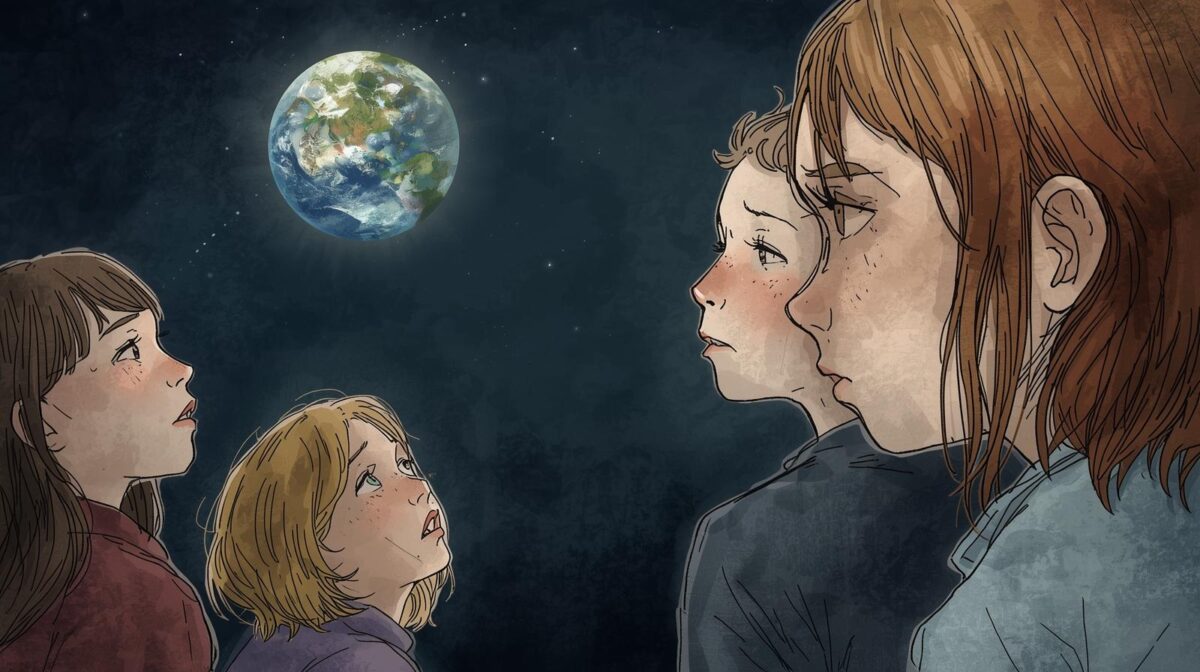
Children are among the most vulnerable groups to the unequal impacts of global warming and extreme weather events. Floods, droughts, and heatwaves are now part of their lived experiences. It is therefore not surprising that many are struggling with eco-anxiety—a deep worry about the planet’s future, often accompanied by anger, helplessness, and a sense of injustice.
Eco-Anxiety Is Not a Trend — It’s a Lived Reality
Eco-anxiety is not a passing fad. It is the lived emotional reality of millions of children across the world. This makes it essential for our education system to acknowledge these emotions and help children transform their anxiety into action and hope.
Studies show that anxiety about the climate crisis can seriously affect children’s mental health, motivation, and ability to focus on learning. If schools continue to ignore these concerns, traditional, subject-focused teaching may lose relevance for many students.
Integrating Environmental Education in Classrooms
An integrated and interdisciplinary approach to education, where environmental education becomes part of everyday classroom discussion, is urgently needed. Although India introduced environmental education in school curricula as early as the 2000s, it has yet to become a truly engaging force in classrooms.
To address eco-anxiety, environmental education must go beyond textbook awareness. It must foster a shift in knowledge, values, and attitudes, helping children understand the connection between human actions and ecological balance. When children feel empowered to act—whether through small daily habits or community projects—they begin to replace fear with hope.
The ultimate goal of climate education should be to ignite and nurture hope for a sustainable future. Educators and policymakers must recognize that awareness alone is not enough; students must learn how to make environmentally responsible decisions that minimize harm and create positive change.
Teaching Climate Change Across Subjects
To achieve this transformation, we must stop treating environmental studies as a separate subject. Instead, it should serve as a lens through which other disciplines are explored. For example, while studying the Industrial Revolution or fossil fuels in history or science, teachers can link discussions to today’s environmental challenges. Literature lessons can explore stories of tribal communities, resilience, and sustainability.
By making these connections, students can bridge global climate trends with their local realities—understanding how pollution, deforestation, or water scarcity affect their communities. They should also be encouraged to explore grassroots climate solutions, such as waste segregation, tree planting, and sustainable farming practices.
Building Hope and Empowerment Through Climate Education
When environmental education in schools connects with children’s real experiences, it restores the power and hope they often lose when hearing about the planet’s decline. Such education equips them with critical thinking, empathy, and problem-solving skills—tools necessary to innovate solutions to the climate crisis.
Feeling anxious about climate change is not a weakness. It is a sign of deep empathy and awareness. As educators, parents, and policymakers, our responsibility is to nurture that empathy and transform it into action.
Environmental education must not only spread awareness and build knowledge—it must also ignite hope, foster resilience, and empower children to work for a better, sustainable future.
Sakshi Uniyal is an educator who has taught in a popular private school in Delhi as well as in a chain of central government schools. She specializes in science and inclusive education. She is currently working with the Environment Education Unit at Centre for Science and Environment, New Delhi. She can be reached at sakshiuniyal1993@gmail.com.