This article argues that young children, if encouraged, can write a journal. This practice, Dialogue Journal Writing is a creative pedagogy with several benefits for language learning and classroom teaching.
Consider this:
‘Students face difficulties with the subject English Language in the IVth grade examination. Many of them are unable to write sentences or spell words, let alone answering examination questions. The English teacher explained the entire examination question paper twice in the classroom and suggested the answers to each question before the entire class. After that, the class teacher instructed the intern-teacher to fill in the answers for several students who had written incorrect or incomplete responses, to present the image of completion for administrative purposes’ (D, B.El.Ed fourth-year student intern at a government school).
The National Education Policy (NEP) 2020 emphasizes the achievement of Foundational Literacy and Numeracy (FLN) by the end of the preparatory stage, recognizing it as an urgent national mission in school education. It writes, ‘The highest priority of the education system will be to achieve universal foundational literacy and numeracy in primary school by Grade 3’ (NEP, 2020, Section 2.2).
This is a lofty ideal that remains elusive. The policy aspires that every student should learn to read and write, but how does a student learn to read and write a language that he or she is not familiar with or does not know at all? This is often the case with the English language, which is a school subject in typical North Indian, Hindi-belt school systems, even though English is not the primary language of most of the students, as is the case in the school in which the intern-teacher had the experience cited above.
In such a context, the study of the language is distorted into its practice as just another formal curriculum subject, largely disregarding its deeper value in enabling students to build an understanding of the world.
As the example cited at the beginning of this article reflects, language education has tended to degenerate into a mechanical process with an examination focus involving decoding words and sentences and ‘writing,’ rather than understanding one’s world or expressing ideas.
The teaching goal is to teach students to read and write correctly, but this is writing that does not necessarily root in thinking, feeling, or creating through language. It is mainly writing involving school-prescribed texts and tasks, which are often disconnected from students’ life experiences. This restricts their natural expression and turns learning into a repetitive, task-type process with limited meaning.
The teaching also keeps one eye on preparation for an examination, which further robs the classroom experience of language learning from its main purpose of constructing one’s world. It is, therefore, not surprising that many children face challenges in acquiring basic literacy skills like reading in developmentally appropriate areas, as many national-level large-scale assessment surveys have indicated.
This often leads to learning difficulties across other school subjects also, as language cuts across the curriculum. The Annual Status of Education Report (ASER) 2016 stated that ‘In Class III, just one in four children can read a Class II level text.’ This implies that although many children are classed as literate (i.e., they have gone through schooling), only about 25% of Class III students in rural India (as per ASER 2016) could fluently read a text of Class II level.
Such findings provoke some re-thinking on adding some meaningful pedagogy in the classroom beyond conventional teaching.
Benefits of Journal Writing
How teachers act in the classroom and the pedagogies they use offer scope to improve classroom learning, especially against the background of the poor learning mentioned above. The practice of journal writing can perhaps improve at least student engagement in the classroom as a baby step forward.
Journal writing is different in nature from the writing that students typically do as part of language teaching-learning. It opens up a free space for students to write for themselves, not merely to please the teacher, complete an exercise, or prepare for an examination but to express their own thoughts, feelings, and experiences.
It has the potential to transform language teaching-learning from a mechanical skill into a dynamic process of meaning-making and self-expression (Vygotsky, 1978). The goal is not to teach language, per se, but to offer this constructive space, simply for itself and not for ‘learning’ as a compulsory part of the formal curriculum.
Such authentic writing may indirectly or directly influence language development as well, but that is not the main purpose. Journal writing has benefits for its own sake.
Journal writing helps children connect learning with their real-life experiences and immediate surroundings because it is open-ended. It turns writing into a natural and joyful process rather than a mechanical task.
When students write journals, they are not practicing writing as a curriculum task but rather expressing thoughts, emotions, and ideas. This process builds confidence and helps them view language as a tool for reflection, not just for administrative classroom compliance of syllabus completion.
When journal writing is linked with literature or storytelling, it becomes further interesting. Reading stories and writing one’s personal response to them in journal form allows children to experience authentic modes of expression.
In our own teaching experience, we have observed students interpret pictures to tell stories very creatively. A Grade III student, for example, described the scenes and imagery of Dussehra quite creatively by also drawing Ravan, firecrackers, sweets, etc., showing personal use of words in her journal writing.
This shift from rote learning-based writing to expressive writing transforms the classroom into a space of joy, imagination, and voice. Simply being able to write one’s own experience of the world is enough joy!
Dialogue Journal Writing
The use of a creative pedagogy such as journal writing assumes that students can write. What if that’s not the case? Young primary-grade students often do not have facility with writing—especially independent writing.
Can young children write a journal at all? Also, what if students do not know the language in which teachers expect them to write? Most of the schools in the New Delhi metropolis have Hindi and English as school subjects, of which the students are often deficient in the latter. How can they learn to write in it?
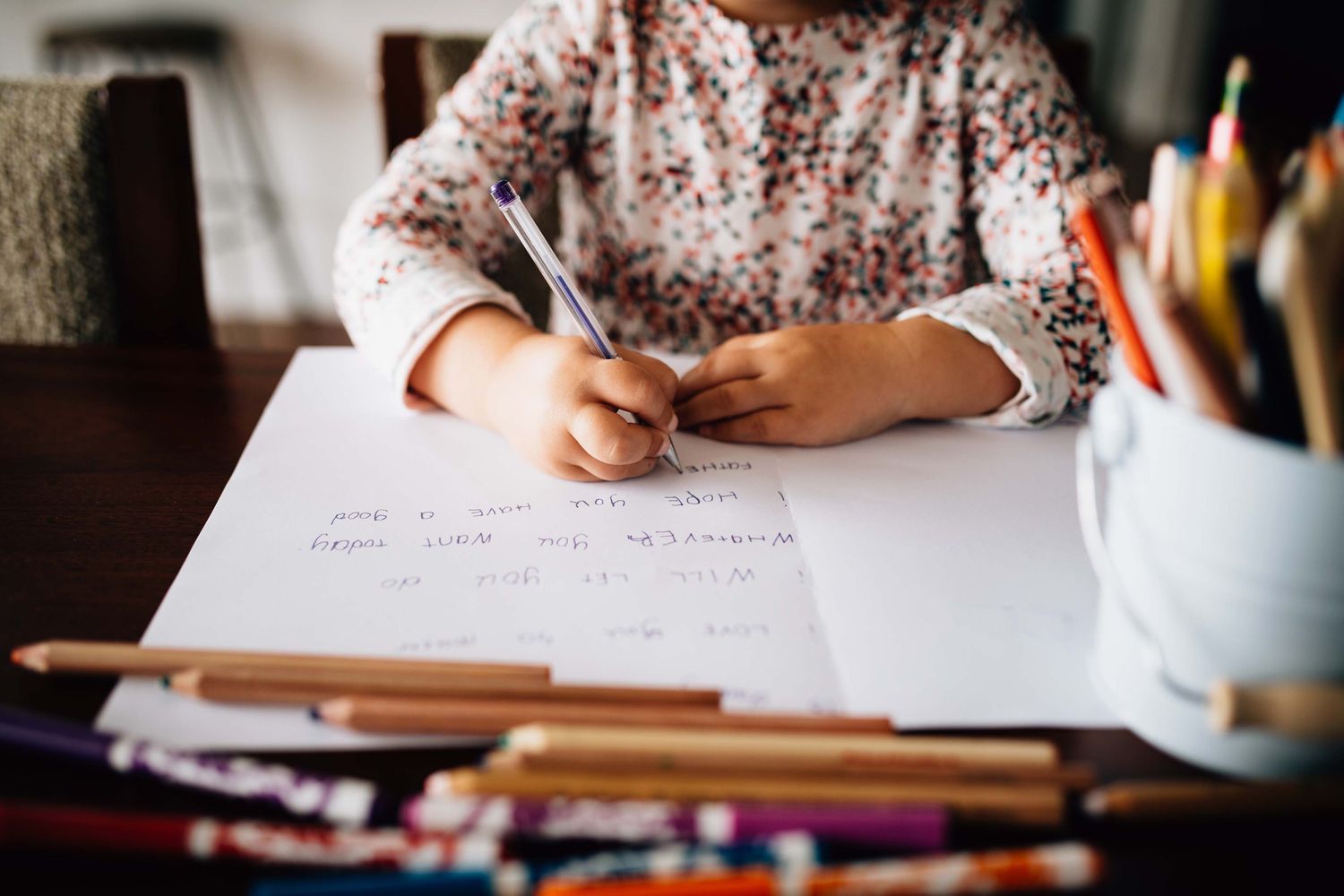
Dialogue Journal Writing, which means a written conversation between a student and a teacher, offers an opening in this direction. During its extended course, the teacher can continually scaffold the students’ preliminary writing attempts in various ways.
This is because it involves continuous writing exchange between the teacher and student on topics of personal interest (Bode, 1989). Unlike traditional writing tasks that focus on correctness, this practice emphasizes meaningful communication and expression while disregarding notions of correctness or incorrectness.
Through these journals, students freely share their thoughts, opinions, and questions, while teachers respond without correcting mistakes. Instead, they model proper language use in their responses to the students’ writing.
This approach can empower students to become active users of language, developing autonomy, confidence, and critical thinking. It also integrates reading and writing in an authentic way, making language learning a natural and expressive process rather than a mechanical one.
By fostering open dialogue, it builds stronger teacher–student relationships and transforms the classroom into a liberating space where learning becomes personal, purposeful, and fear-free.
During our school internship, we have practiced it with students of Grade III by providing a daily prompt in various modes during a designated slot while keeping a separate notebook handy. Students are able to write something for sure, to which the teacher-intern responds in an engaging but comprehensible, developmentally appropriate manner.
This may be just one or two sentences or a small paragraph. The notebook is returned each day, which keeps movement in the conversation. Meaningful teaching-learning possibilities have emerged from this dialogue.
As a pedagogical approach, dialogue journal writing builds self-expression because students do not fear being corrected for grammar or the informative content of what they write (mostly personal facts).
In our teaching experience, we found that within a month, the students start identifying patterns, recognizing correct spellings, and refining their writing. Such pedagogies encourage a shift from correction to connection, from rote learning to self-constructs—almost as if the student and the teacher move into a surreal alternative universe known only to the two of them.
When we shared some of the details of this practice with the regular teachers of the government school in New Delhi where this dialogue journal writing programme was undertaken, they all responded with disbelief, asking the question: Can young children write a journal at all? Can they write even a single sentence independently at all?
Well, they do. It was, therefore, reassuring to read the re-affirmation offered by the teaching experience of one of our department alumni, who is a primary teacher in New Delhi now, that ‘children enter school with rich linguistic resources drawn from home, play, and observation’ (Sharma, 2025).
Dialogue journal writing offers opportunities for teachers to build on such a resource-rich foundation. From a Vygotskian perspective, the written interactions provide an individualized scaffold that expands the student’s Zone of Proximal Development (ZPD).
A student, for example, wrote, ‘Sometimes she writes me the same but with different words and I understand, and so next time I put it right.’ The student writes without fear of failure on account of the reducing writing apprehension. However, by looking at the teacher’s writing in the response to her journal entry, the student comes across grammatical structures, vocabulary, and accepted conventions of writing (Garmon, 2001; Rana, 2018).
It not only leads to self-reflection coupled with a strengthened teacher-student relationship but also facilitates learning.
The internship and teaching experiences with young children and the research discussed above indicate that in language education, there is a great deal of benefit in moving away from the textbook as well as from the examination orientation. Creative practices such as dialogue journal writing merit more attention in the primary-grade classroom.
References
Bode, Barbara. 1989. ‘Dialogue Journal Writing’, The Reading Teacher, 43(8), 568–571.
Garmon, M. A. (2001). The Benefits of Dialogue Journals: What Prospective Teachers Say. Teacher Education Quarterly, 28(4), 37–50. Accessed from http://www.jstor.org/stable/23478315 on October 25, 2025.
Rana, Lal. (2018). The Use of Dialogue Journals in an ESL Writing Class from Vygotskyan Perspective. Journal of NELTA Surkhet, 5, 1. https://doi.org/10.3126/jns.v5i0.19481.
Sharma, V. (2025). ‘How Classroom Talk Boosts Child Language and Learning’, The Armchair Journal, October 25, 2025.
Vygotsky, L. S. (1978). Mind in Society: The Development of Higher Psychological Processes. Harvard University Press.
Tanya is a IVth-year student of the Bachelor of Elementary Education programme. Jyoti Raina is a Professor at the Department of Education, Gargi College.